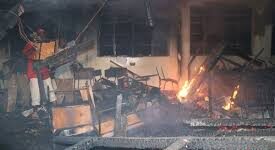
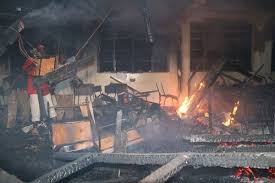
The smoke rising over our national learning institutions is no longer just an isolated disaster; it is a profound national crisis. The devastating arson attack at Utumishi Girls Academy in Gilgil, Nakuru County, which tragically claimed the lives of 16 students and left dozens hospitalized, has broken the heart of the country. This nightmare comes as a painful reminder of past horrors, echoing the 2024 inferno at Hillside Endarasha Academy in Nyeri that claimed 21 innocent young lives.
With the Ministry of Education confirming that over 204 senior boarding schools have been hit by waves of unrest this term, it is clear that our education system is operating inside a pressure cooker. We cannot keep mourning our children and rebuilding charred walls in a continuous cycle. To fix this perennial problem, we must understand exactly why these tragedies occur, discard the outdated measures that fail us, and establish a fresh, collaborative blueprint for survival.
Part 1: Anatomy of a Crisis—Why Our Schools are Burning
Arson in Kenyan schools is rarely a spontaneous act of malice. Rather, it is the destructive climax of several converging systemic, psychological, and modern factors:
-
The Academic Pressure Cooker: Term Two is historically the longest and most exhausting stretch of the school calendar—running for 14 grueling weeks. Packed with intense syllabus deadlines and high-stakes examination blocks, this marathon creates severe, unvented learner anxiety. Desperate to escape the mental exhaustion, burning a dormitory becomes a distorted, fast-track ticket to a forced school closure.
-
The Social Media “Copycat” Loop: We live in an era where digital content spreads at lightning speed. When a strike or fire occurs at one institution, dramatic footage is instantly uploaded to TikTok, WhatsApp, and Telegram. Social media algorithms push these videos directly to the screens of stressed teenagers nationwide, creating a dangerous wave of mass hysteria and copycat behavior.
-
Substandard and Overcrowded Spaces: Driven by rapid state enrollment pushes like the “100% Transition Policy,” public boarding facilities have outstripped their infrastructural capacities. Congested dormitories with narrow pathways and blocked exits turn minor sparks into inescapable death traps.
-
Improvised Hazards: Because smartphones are banned but widely smuggled into dorms, students frequently engage in highly dangerous, illegal electrical wiring—slicing into live ceiling fixtures behind lights to charge hidden devices or power banks, directly overloading old power grids.
Part 2: Policy Comparison—What Fails vs. What Works
For decades, the standard response to school unrest has been reactive and authoritarian. It is time to look honestly at what actually works versus what is actively putting our children in harm’s way.
What Fails: The Illusion of “Fortress Security”
-
Locked Doors and Window Grills: For years, school administrations focused heavily on keeping outsiders out or preventing students from sneaking out at night by padlocking dormitory doors from the outside and installing thick iron window grills. This is fatal. As proven by recent tragedies, this turns living spaces into cages, completely cutting off escape routes during a fire stampede.
-
Total Deprivation and Blanket Bans: Treating technology and global pop culture as a taboo that must be strictly banned has driven it underground. Searching bags does not stop smuggling; it simply encourages students to invent dangerous, hidden charging methods behind dormitory walls.
-
Top-Down Authoritarianism: Relying on hand-picked student prefects who act as extensions of the administration’s enforcement arm alienates the student body. When communication breaks down completely, destruction becomes the students’ only form of “dialogue.”
What Works: Progressive, Modern Solutions
-
Enforced Open Infrastructure (Panic Bars): Rather than using padlocks, all dormitory doors must be retrofitted with push-to-open panic bars. These remain securely locked from the outside to stop intruders, but yield instantly from the inside the moment a student pushes against them. Window grills must remain entirely banned.
-
Calendar Rationalization: Education Cabinet Secretary Julius Ogamba recently announced that the government will officially rationalise the school calendar to ensure shorter, balanced academic terms. Furthermore, the absolute ban on stressful multi-school mock exams must be strictly maintained, pivoting instead toward lower-stakes internal continuous assessments.
-
Managed Digital Outlets: Schools must stop fighting a losing war against technology and start regulating it. Providing structured, centralized charging stations in public dining areas eliminates structural electrical tampering. Setting aside designated weekend afternoon blocks for students to watch live sports or global news in the social hall acts as an effective relief valve for entertainment cravings.
Part 3: The Multi-Stakeholder Responsibility Matrix
Defeating this crisis requires an organized ecosystem of accountability. No single entity can solve this alone; every stakeholder must actively step into their designated role.
                  ┌─────────────────────────────────────┐
                  │      MINISTRY OF EDUCATION          │
                  │  • School Calendar Rationalization  │
                  │  • Strict Inspectorate Audits       │
                  └──────────────────┬──────────────────┘
                                     │
          ┌──────────────────────────┴──────────────────────────┐
          ▼                                                     ▼
┌───────────────────────────────────┐                 ┌───────────────────────────────────┐
│     SCHOOL ADMINISTRATION & BOM   │                 │       PARENTS & COMMUNITIES       │
│ • Unblock Emergency Exits         │                 │ • Eliminate Academic Mean-Score Fixation│
│ • Host Weekly Student Barazas    │                 │ • Enforce Local Contraband Bans   │
│ • Support Democratic Councils     │                 │ • Active PA Safety Oversight      │
└───────────────────────────────────┘                 └───────────────────────────────────┘
1. The Government and Ministry of Education
The state must transition its approach from reactive mourning to rigid enforcement. The newly expanded Inspectorate of Schools must deploy its boots on the ground to conduct unannounced, rigorous physical audits across all sub-counties, shutting down any institution that violates fire safety rules. More importantly, policy must progressively shift funding to build robust, localized day secondary schools, systematically reducing our nationwide over-reliance on high-pressure boarding environments.
2. School Administrations and Boards of Management (BOM)
School principals must replace authoritarian control with open communication. Administrations must establish mandatory, weekly, open-floor student barazas (town halls) where learners can voice grievances regarding food quality, scheduling, or social friction directly to management without fear of victimization or suspension. Furthermore, hand-picked prefect networks should be disbanded and replaced by democratically elected Student Councils to bridge the communication gap.
3. Parents and Families
Discipline and emotional grounding begin at home. Parents must actively strip away their toxic fixation on high academic mean scores and rankings, replacing those demands with consistent emotional check-ins during holidays and mid-term breaks. When a child is home, parents must practice active listening—validating their complaints about school stress rather than dismissing them.
4. The Surrounding Community
The villages, estates, and kiosks bordering our schools must serve as an external protective shield. Local shopkeepers and boda-boda operators must enforce a strict “Zero-Contraband Zone,” categorically refusing to sell matchboxes, lighter fluids, fuel, alcohol, or illicit substances to any minor or student in uniform. Local Nyumba Kumi community policing units must maintain active intelligence sharing with school authorities, reporting any suspicious activities or vulnerabilities along remote perimeter walls before they cross the school fence.
Conclusion: A Shared Vow
Every time a school dormitory burns in Kenya, we burn a piece of our collective future. The ongoing losses are a stark indictment of systemic compliance gaps and societal pressure.
As our schools head into the upcoming mid-term break, let it not just be a recess from classwork, but a critical window for resetting our priorities. By modernizing our school infrastructure, shortening our academic terms, opening democratic channels of communication, and cleaning up our school boundaries, we can transform our schools back into what they were always meant to be: sanctuaries of safe learning, growth, and hope.